Most people think of bones as hard, fixed structures. In fact, bone is living tissue that is constantly being broken down and rebuilt. In youth the building wins and bones grow denser, reaching a peak in the late twenties or early thirties. After that, the balance slowly tips. In women, loss speeds up around menopause because oestrogen, which protects bone, falls. Men lose bone too, usually more gradually.
The good news is that you have real influence over this. Exercise, food and certain habits can slow the loss and keep your skeleton strong enough to keep you active for decades. Falls and fractures, especially of the hip and spine, are among the main reasons older people lose independence, so the effort you put in at 40 pays off at 70.
What makes bone respond
Bone adapts to the loads placed on it. Mechanical stress tells the bone cells to lay down more tissue where it is needed. 2 types of stress matter most:
- Weight bearing impact. Activities where your feet hit the ground, such as walking briskly, jogging, dancing, stair climbing and skipping.
- Resistance (strength) training. Muscles pulling on bone as you lift, push or pull heavy enough loads.
Swimming and cycling are excellent for the heart, but because the water or the saddle supports your weight, they do little for bone. They are still worth doing, just add loading exercise alongside them.
What the evidence broadly supports
Research consistently shows that a mix of resistance training and impact exercise helps preserve bone density in the hip and spine in middle aged and older adults, and strength and balance training reduce falls. The gains are modest, but even maintaining bone density rather than losing it makes a difference. Consistency over years is what counts, and the programme must be challenging, not just gentle.
A weekly plan after 40
Aim for these, adjusting to what your doctor says about your health:
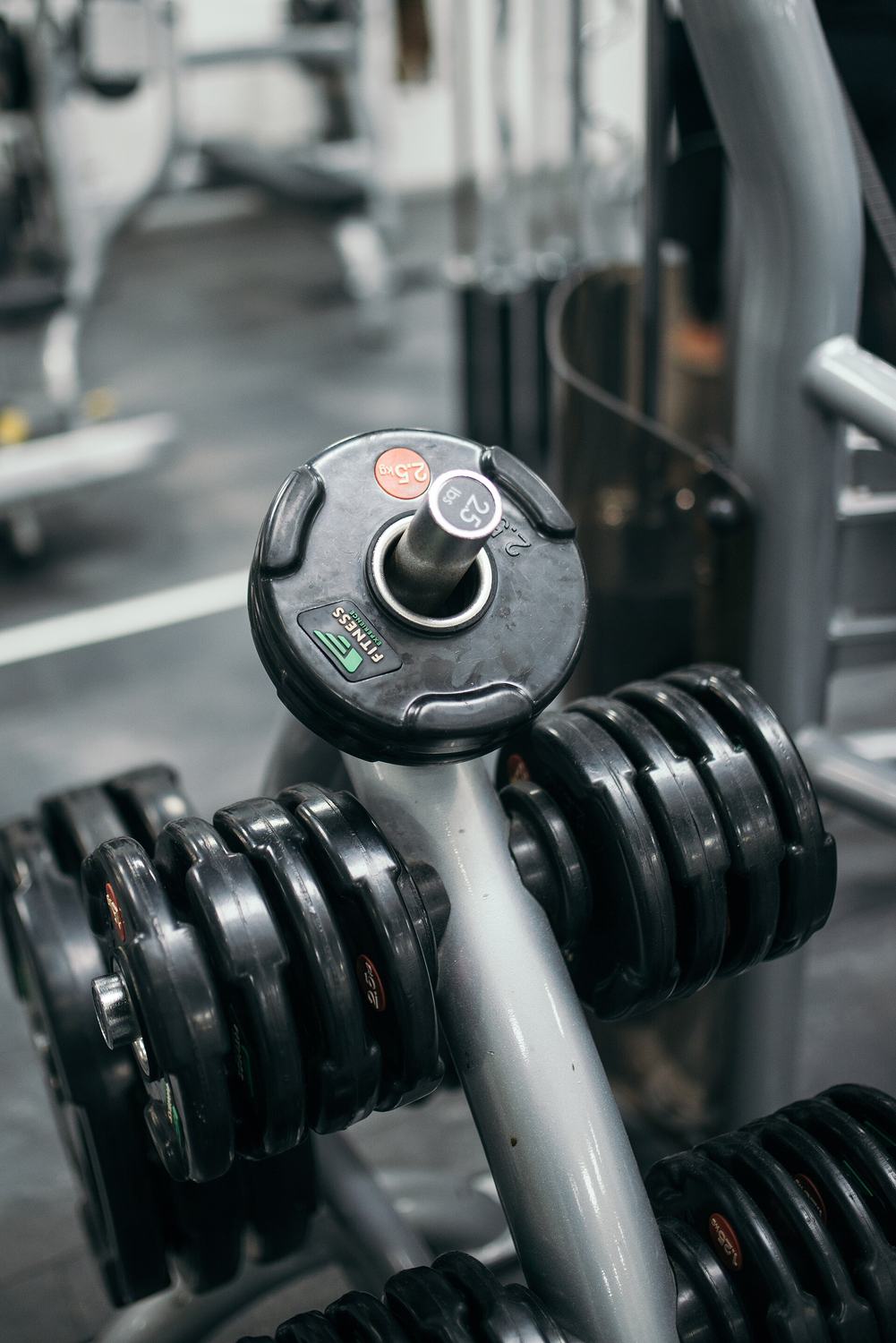
- Strength training 2 to 3 days a week, working all the main muscle groups.
- Weight bearing cardio on most days, such as 30 minutes of brisk walking. Climb stairs when you can instead of using the lift.
- Short bursts of impact 2 to 3 days a week, if your joints allow: brisk stair climbing, step ups, skipping, or small hops.
- Balance work most days, for example standing on 1 leg while you brush your teeth.
Sample strength session
Warm up for 5 to 10 minutes, then:
- Squat or goblet squat: 3 sets of 8 to 10.
- Deadlift or Romanian deadlift with dumbbells or a barbell: 3 sets of 6 to 8. Keep your back flat and hinge at the hips.
- Overhead press with dumbbells: 3 sets of 8 to 10.
- Row (cable, band or dumbbell): 3 sets of 8 to 10.
- Step ups onto a low box: 3 sets of 8 each leg.
- Farmer's carry: walk 20 to 30 metres holding a heavy dumbbell or bucket in each hand, 3 times.
The loads need to feel heavy for the last few reps. For bone, 6 to 10 repetitions with a weight you could not lift more than 2 or 3 more times is a good guide. Increase the weight gradually as you grow stronger.
Food for strong bones
- Calcium. Adults generally need around 1000 mg a day, more for women after menopause. Good sources are milk, yoghurt, small fish eaten whole such as mukene, dark leafy greens such as sukuma wiki, beans and groundnuts. Fortified foods can help too.
- Protein. Bones are about half protein by volume, and protein also feeds muscle. Include eggs, fish, meat, beans, milk or other sources at each meal.
- Vitamin D. It helps you absorb calcium. Sunlight on the skin is the main source, and in Uganda many people get enough from normal outdoor time, but those who cover most of their skin, work indoors all day or have certain medical conditions may be low. A doctor can test your level before you take supplements.
- Vitamin K, magnesium and other minerals from vegetables, nuts and whole grains.
Supplements are only useful if you are actually short. More is not better, and very high calcium doses can cause problems.
Habits that harm bone
- Smoking speeds up bone loss.
- Heavy alcohol use interferes with bone building and increases the risk of falls.
- Very low calorie dieting or being underweight lowers bone density.
- Long periods of sitting reduce the loading that bones need. Stand up and walk for a few minutes every hour.
- Some medicines, such as long term steroids, can weaken bone. Do not stop them, but discuss it with your doctor.
Know your risk
Risk factors include being a woman after menopause, early menopause, a family history of hip fracture, a previous fracture from a minor fall, long term steroid use, low body weight, smoking, and certain conditions. If you have several of these, or if you have lost height, developed a stooped back, or broken a bone easily, ask your doctor about a bone density scan, called a DEXA scan, and treatment.
If you already have osteoporosis or osteopenia, you should still exercise, but get advice initially. Avoid forceful twisting, deep forward bending under load and high impact jumping unless a professional has cleared it. A physiotherapist or an experienced trainer can design a safe programme.
Common mistakes
- Relying only on swimming, cycling or yoga for bone. Add lifting and walking.
- Lifting too light. Bone needs a challenge.
- Doing everything on day 1. Build over 8 to 12 weeks, especially if you are new to lifting.
- Neglecting balance. A fracture usually follows a fall, so preventing falls is part of bone health.
- Waiting until after a fracture. Start now.
Key takeaways
- Bone is living tissue that responds to load, and the effort you make after 40 protects you for decades.
- Combine strength training, brisk walking or other weight bearing impact, and balance work each week.
- Eat enough calcium, protein and vitamin D rich foods, and get some safe sun.
- Avoid smoking, heavy alcohol use and crash diets.
- Talk to a doctor about a bone scan if you have risk factors or have broken a bone from a minor fall.