Why some people struggle to gain
Many people want to lose weight, but plenty of others want to gain and cannot. If you are tall and slim, you may hear "you eat so much, where does it go?" The answer is usually one of these:
- You eat less than you think. Many "hard gainers" skip meals, eat small portions and forget snacks.
- You have a high activity level, a busy job on your feet, or a lot of walking.
- You fill up quickly and lose appetite easily.
- Your genetics favour a lean build.
It is almost never a case of a broken metabolism. To gain weight, you must eat more energy than you burn, consistently. The trick is making that happen without feeling stuffed, and making sure the weight you gain is useful, meaning muscle, not just fat.
Check the basics initially
Before changing your diet, see a doctor if you have lost weight without trying, have constant diarrhoea, fatigue, fever, night sweats, or a very large appetite with weight loss. Unplanned weight loss or being underweight can come from thyroid problems, diabetes, infections or digestive conditions. A quick check rules these out.
If your health is fine, set a target. A reasonable aim is to gain about 0.25 to 0.5 kg a week. Faster than that tends to be mostly fat.
Eat more, and make it easy
For most people, you need to add about 300 to 500 calories a day above what you now eat. That is not as large as it sounds. You can do it with a few additions:
- A glass of whole milk with breakfast or before bed: about 150 calories.
- 2 tablespoons of groundnut paste or a handful of groundnuts: 150 to 200 calories.
- An extra boiled egg or 2: roughly 70 calories each.
- Half an avocado: around 120 to 150 calories, with healthy fats.
- An extra serving of rice, matooke or sweet potato.
- A teaspoon or 2 of oil added to a meal.
Eat more often
If large meals put you off, eat more frequently:
- Breakfast: eggs, bread or porridge with milk and groundnut paste, and a banana.
- Mid-morning snack: groundnuts, a sweet potato or a handful of dried fruit.
- Lunch: a generous plate of rice or matooke with beans or fish or meat, vegetables and avocado.
- Afternoon snack: yoghurt with fruit, or a boiled egg and bread.
- Dinner: posho or rice with meat or fish and greens.
- Before bed: milk, or a banana with groundnut paste.
Set phone alarms until eating at those times becomes a habit.
Calorie dense foods that are not junk
- Groundnuts and groundnut paste
- Avocado
- Whole milk and yoghurt
- Eggs
- Fish like tilapia and Nile perch, including the skin when cooked well
- Beans and lentils with rice
- Oats or porridge made with milk instead of water
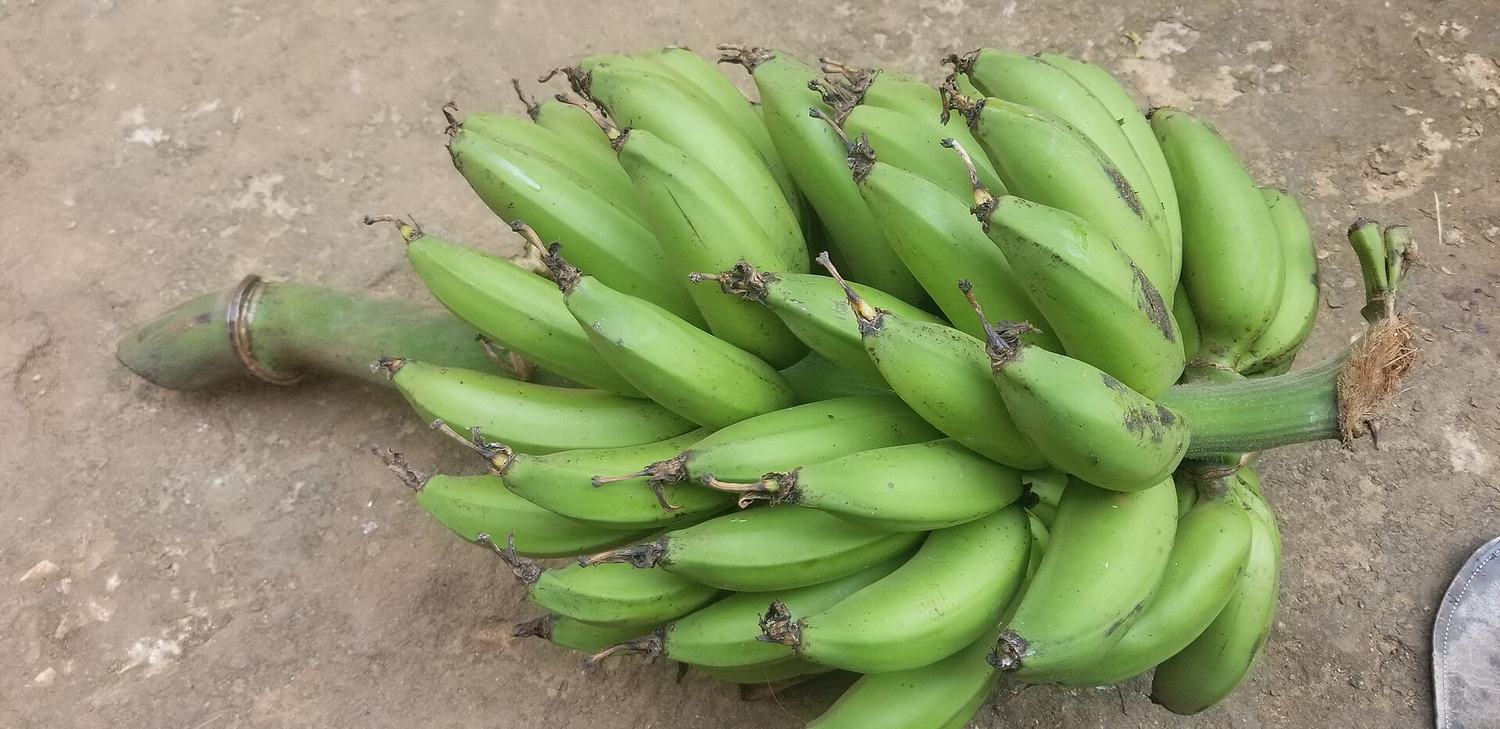
- Bananas, mangoes, pineapple and jackfruit
- Cooking oil used moderately
Drink your calories
If solid food is a struggle, liquids help. Blend milk, a banana, oats and a spoon of groundnut paste into a smoothie, or make full cream porridge. These are easier to finish than a plate of food.
Protein matters
To build muscle rather than only fat, aim for about 1.6 to 2.2 grams of protein per kilogram of body weight each day. For a 60 kg person, that is roughly 95 to 130 grams. Include a protein source at every meal.
Train for it
Without training, extra calories go mostly to fat. Lifting tells your body to build muscle with the surplus.
A simple routine
3 days a week, full body:
- Squat or leg press: 3 sets of 8 to 10
- Bench press or push-ups: 3 sets of 8 to 10
- Row or lat pulldown: 3 sets of 8 to 10
- Romanian deadlift: 3 sets of 8
- Overhead press: 2 sets of 10
- Plank or core work: 2 to 3 sets
Add weight in small amounts when you complete every set. Keep your sessions to 45 to 60 minutes.
Cut back on extra cardio
If you run a lot or play several hours of football each week, your calorie burn may be undoing your food efforts. You do not need to quit, but reduce it while you are trying to gain, and prioritise strength training and walking at an easy pace.
Rest and recovery
Sleep 7 to 9 hours. Muscle is built during rest, and short sleep reduces appetite hormones. Keep stress as low as you can, and keep at least 2 rest days a week.
Track and adjust
- Weigh yourself 2 to 3 times a week in the morning and average the readings.
- If your weekly average is not rising after 2 to 3 weeks, add another 200 to 300 calories.
- If you gain more than about 0.5 kg a week for several weeks, trim your extras a little.
- Take photos and measure your arms, chest and thighs monthly.
Be patient. A slim person who adds 3 to 5 kilos of mostly muscle over 6 months has done very well.
Common mistakes
- Eating junk foods such as sodas, chips and sweets to hit calories. You will gain fat and feel poorly.
- Gaining a week, then stopping because it feels hard. Consistency over months matters most.
- Eating huge meals, feeling bloated and quitting. Spread it out.
- Not training. Food alone will give you softness, not strength.
- Supplement shopping before food habits are fixed. Whole foods come initially.
Key takeaways
- Weight gain needs a steady calorie surplus of about 300 to 500 calories a day.
- Use affordable calorie dense foods such as groundnuts, avocado, milk, eggs, oats and starches.
- Eat more often, drink some calories and keep protein high at every meal.
- Lift weights 3 times a week so the surplus becomes muscle.
- See a doctor initially if weight loss is unplanned or comes with other symptoms.