Why indoor cycling suits beginners
Cycling takes your body weight off your joints. On a stationary bike your knees, hips and ankles carry far less impact than when running, so it is a good option if you are heavier, returning from a long break, or simply new to exercise. You can also control the effort precisely by changing resistance, and you can stop or slow down at any moment.
In Kampala, where traffic and road conditions make outdoor cycling risky for many people, an indoor bike gives you a safe way to build stamina. It works your legs, glutes and heart, burns plenty of energy, and fits easily into a 30 minute lunch break.
Types of indoor bike you will meet
Most gyms have a few different machines. Knowing the difference helps you pick one.
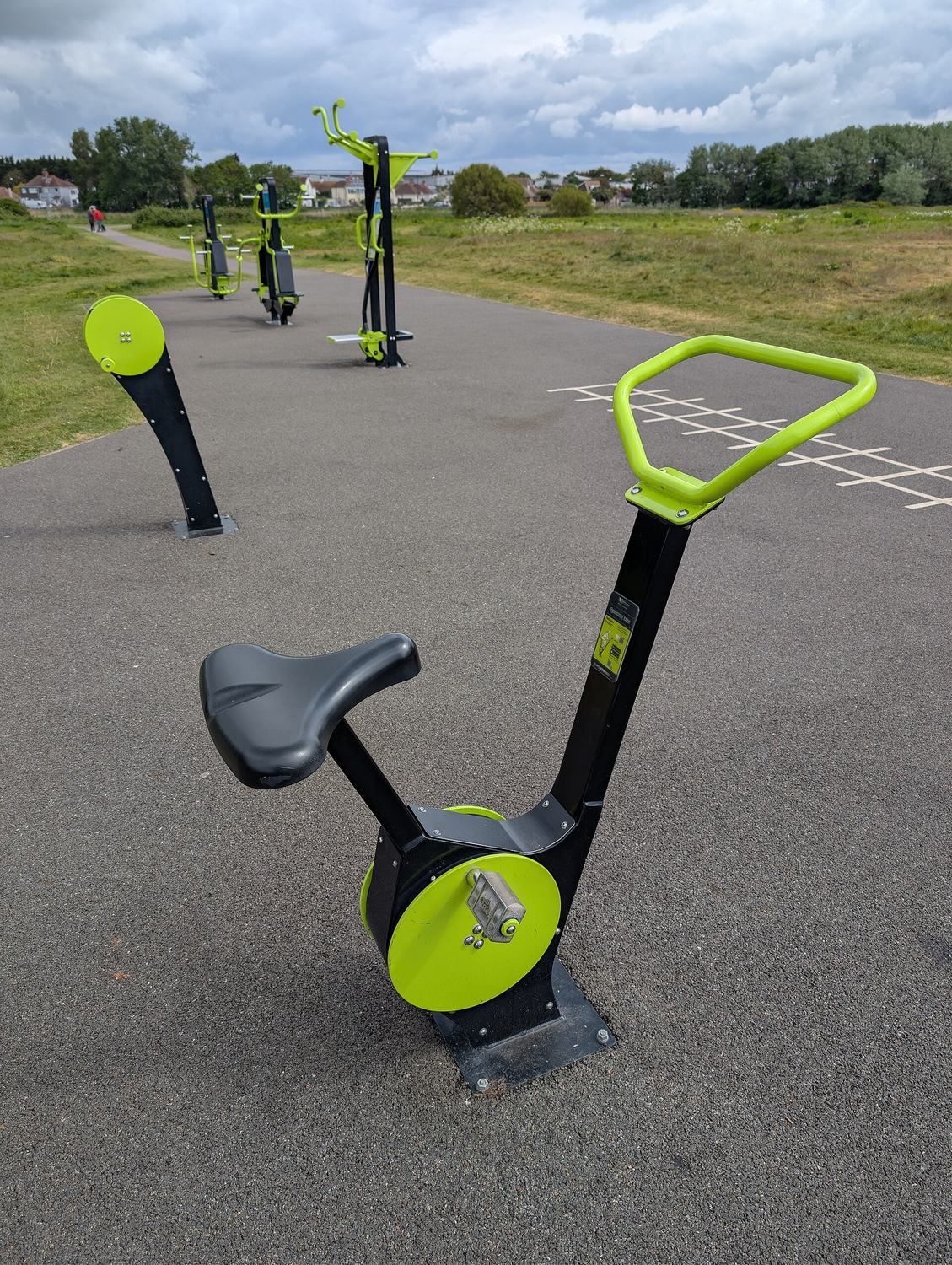
- Upright bike: Looks like a regular bike with a small seat. It suits most people and is easy to adjust.
- Recumbent bike: You sit back with back support. It is kind to the lower back and good for people with balance concerns or back stiffness.
- Spin bike: A heavier flywheel with a fixed pedal motion and a manual resistance knob. These are used in group spin classes and feel closer to riding outdoors.
For an initial session, an upright or recumbent bike is a gentle starting point. Try a spin bike when you feel confident.
Set the bike up properly
A poor setup is the main cause of knee pain and sore backs on bikes. Take 2 minutes to adjust before you start.
Saddle height
Stand beside the bike. The top of the saddle should be roughly level with your hip bone. When you sit and place your heel on the pedal at its lowest point, your leg should be almost straight. When you pedal with the ball of your foot, you will have a slight bend in the knee.
Saddle position and handlebars
Sit so that when the pedals are level, your forward knee is roughly above the pedal. Raise the handlebars to around saddle height at the start. Higher bars are more comfortable while you build strength and flexibility.
Feet
Wear flat, firm-soled trainers. If the bike has straps or cages, tighten them lightly. Clip-in shoes are not needed when you begin.
How to pedal well
- Sit tall with a long spine and relaxed shoulders.
- Keep a soft grip on the handlebars. Tight hands lead to sore wrists and neck.
- Push and pull in smooth circles, not stamping on the pedals.
- Keep your knees tracking straight over your toes, not swinging in or out.
- Aim for a steady cadence, around 70 to 90 rotations per minute for general fitness.
- Use resistance to create effort, not just speed. Spinning with no load makes the legs fly and does little for fitness.
If you feel the work only in your quadriceps and your knees ache, lower the resistance and check your saddle height.
Your initial 4 sessions
Start modestly. Saddle soreness and tired legs are normal in the initial weeks.
- Session 1, 15 minutes: Pedal easily for 5 minutes, then 8 minutes at a comfortable steady effort where you can talk, then 2 minutes easy.
- Session 2, 20 minutes: Warm up for 5 minutes. Pedal for 10 minutes at a steady pace. Add 3 short bursts of 30 seconds with a little extra resistance, with 1 minute easy between. Cool down for 3 minutes.
- Session 3, 25 minutes: Warm up for 5 minutes, ride 15 minutes steady, then cool down for 5 minutes.
- Session 4, 30 minutes: Warm up for 5 minutes. Alternate 3 minutes at moderate resistance with 2 minutes at easy resistance, 4 times. Cool down for 5 minutes.
Aim for 2 to 3 sessions a week to start. Combined with other activity, this takes you toward the WHO target of at least 150 minutes of moderate activity each week.
Understanding effort
Instead of obsessing over numbers on the screen, use a simple 1 to 10 scale for how hard it feels.
- 3 to 4: Easy. You can chat without effort.
- 5 to 6: Moderate. Breathing is deeper and you can say short sentences.
- 7 to 8: Hard. Only a few words at a time.
- 9 to 10: Maximum. Used only in short bursts, if at all, for beginners.
Most of your rides should sit between 4 and 6. Save the 7 to 8 efforts for short intervals once you have a few weeks of base fitness.
Joining a spin class
Group classes are loud, fast and fun, and they are a great way to stay motivated. As a beginner:
- Arrive early so the instructor can set your bike up.
- Tell the instructor it is your initial class.
- Ignore the pace of the person beside you. You control your own resistance.
- Take it easy on standing climbs until your legs are stronger.
- Drink water between songs or intervals.
If a class feels too hard, reduce the resistance and keep pedalling. You will not be judged for it.
Common mistakes and fixes
Seat too low. This overloads the knees. Raise it until your leg nearly straightens at the bottom of the stroke.
Too much resistance too early. This stresses knees and tires you out fast. Choose a load that lets you keep a smooth rhythm.
Bouncing in the saddle. If your hips rock from side to side, the seat is too high or the resistance too low.
Gripping tightly and hunching. Relax your arms and bring your chest up.
Skipping fluids. Indoor rooms get warm and you sweat more than you notice. Drink regularly, and have a snack such as a banana before an early ride.
Never combining it with strength work. Cycling builds the legs but does little for the upper body or bones. Add 2 weekly strength sessions.
If you have knee, hip or back pain that does not settle, or any heart or blood pressure concerns, speak to a doctor or physiotherapist before increasing your training.
Key takeaways
- Indoor cycling is low impact and adjustable, making it a safe start for most beginners.
- Set the saddle at hip height, with a slight bend in the knee at the bottom of each pedal stroke.
- Keep a smooth cadence of about 70 to 90 rotations per minute with some resistance.
- Start with 15 to 20 minute sessions 2 or 3 times a week and build slowly.
- Use effort on a 1 to 10 scale, and keep most rides moderate.
- Add strength training and do not skip fluids in the heat.