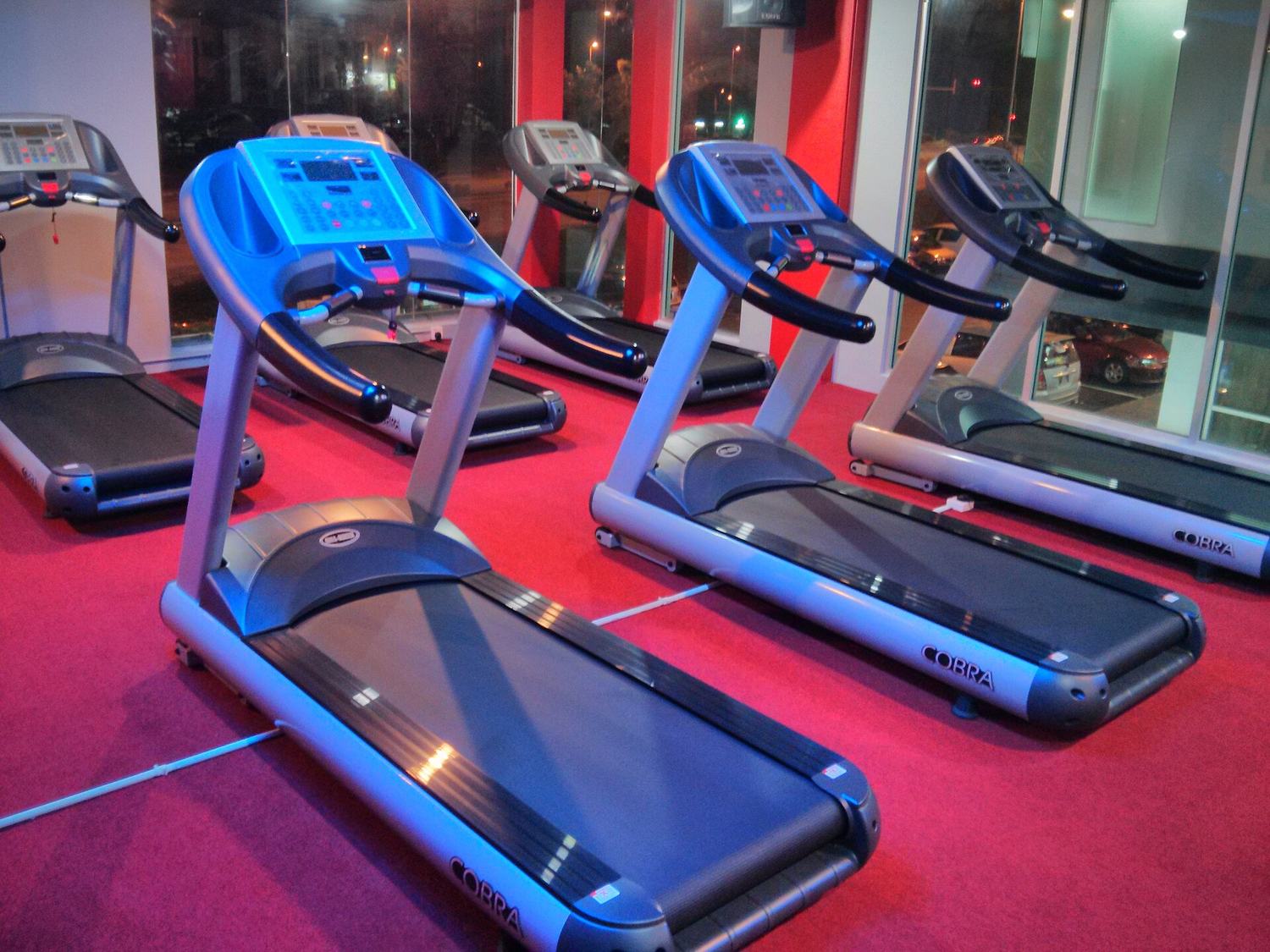
Why the treadmill works
A treadmill takes the weather, traffic and uneven ground out of the equation. You can train at midday when it is hot, in the rain, or after dark, and you control speed and incline exactly. That makes it one of the easiest ways to build steady cardio and to track progress from week to week.
It also suits every fitness level. Someone who has not exercised in years can start with a gentle walk, while a seasoned runner can use the same machine for hard intervals. The skill is choosing the right workout for today and not going too hard too soon.
Set up before you start
A few quick checks make every session safer and more comfortable.
- Wear proper trainers with cushioning, not flat sandals or worn-out shoes.
- Clip the safety key to your clothing if your machine has one.
- Stand on the side rails while you start the belt, then step on at a slow speed.
- Start with 5 minutes of easy walking to warm up.
- Keep your head up, shoulders relaxed and arms swinging naturally.
- Avoid holding the handrails for long stretches. It shifts your weight and reduces the work you do.
A fan or open window helps a lot in humid weather. Keep a bottle of water within reach and sip regularly.
Level 1: walking workouts
Walking is not a lesser workout. For many people it is exactly the right dose, and it meets the WHO guideline of 150 minutes of moderate activity a week when done briskly.
Steady walk
Walk at a pace where your breathing is heavier but you can still talk. For most beginners this is somewhere between 4 and 6 km/h. Start with 20 minutes and add 5 minutes each week.
Walk with gentle incline
Once the flat walk feels easy, raise the incline to 2 to 4 percent. This lifts your heart rate without making you run. Try 3 minutes at 1 percent, 3 minutes at 3 percent, and repeat for 24 minutes.
Walk intervals
Alternate 2 minutes of brisk walking with 1 minute of easy walking, 8 times. As this becomes easy, lengthen the brisk periods.
Level 2: intervals
Intervals mix harder efforts with easy recovery. They raise your fitness faster than steady effort alone, and they pass the time quickly. Do them once or 2 times a week, not every day.
Beginner run-walk intervals
- Warm up with 5 minutes of walking.
- Jog for 1 minute, walk for 2 minutes. Repeat 6 times.
- Cool down with 5 minutes of easy walking.
Intermediate intervals
- Warm up for 10 minutes at an easy jog.
- Run hard for 1 minute at a pace you could hold for about 10 minutes, then jog or walk for 90 seconds. Repeat 6 to 8 times.
- Cool down for 5 to 10 minutes.
Pyramid session
Warm up, then run 1 minute hard, 2 minutes hard, 3 minutes hard, then back down to 2 and 1, with equal time easy between each. It breaks a hard session into friendly pieces.
The hard efforts should feel difficult but controlled. If your form falls apart or you grip the rails, reduce the speed. You should finish an interval session tired but not destroyed.
Level 3: hill workouts
Hills build leg strength, burn more energy and improve running economy. If you live around Kampala's 7 hills, you already know how demanding they are. The treadmill lets you practise in a controlled setting.
Incline walking
Set the incline at 6 to 10 percent and walk at a pace of 4 to 5 km/h. This is a very effective workout for glutes and calves. Many people find it harder than running on the flat. Do 10 minutes, rest for 2, and repeat.
Hill repeats
- Warm up for 10 minutes.
- Set the incline to 5 to 6 percent. Run for 2 minutes at an effort that feels hard.
- Lower the incline to 1 percent and jog for 2 minutes to recover.
- Repeat 5 times, then cool down.
Raise the incline gradually across weeks. Avoid very steep settings with fast speeds, since this can strain your Achilles tendons and calves if you are not used to it.
A sample treadmill week
For a beginner building up:
- Day 1: 25 minutes steady walk.
- Day 2: Rest or a gentle walk outdoors.
- Day 3: Walk intervals, 20 to 25 minutes.
- Day 4: Strength training.
- Day 5: 30 minutes walk with gentle incline.
- Weekend: 1 longer easy session or an outdoor walk.
For someone more experienced, swap in one interval session and one hill session, and keep 1 session easy. Add strength training 2 times a week.
Common mistakes
Holding the handrails. It looks safe but changes your posture and reduces calorie burn. If you need the rails for balance, slow down.
Going too fast, too soon. Increase time or speed by small amounts. A good rule is not to add more than about 10 percent to your weekly total.
Ignoring pain. Mild muscle soreness is normal. Sharp pain in the shins, knees or feet is not. If pain persists, rest and see a physiotherapist or doctor before pushing on.
Staring at the calorie counter. The number on the display is a rough guess. Focus on time, effort and consistency.
Using it as the only exercise. Treadmill work builds the heart and legs, but you also need strength training, especially for hips, core and upper body.
Skipping the cool-down. Walk slowly for 5 minutes at the end so your heart rate comes down gradually.
Keeping it interesting
The treadmill can feel dull if you do the same thing every time. Rotate between steady, interval and hill days. Set small targets such as walking 3 km without stopping, or running for 10 minutes straight. Listen to music or a podcast, and write down each session so you can see improvement.
If you are pregnant, have heart or lung problems, or are returning after injury, get medical advice before starting and keep the effort gentle.
Key takeaways
- The treadmill gives you full control of speed and incline, whatever the weather.
- Walking is a legitimate workout, and brisk sessions count toward 150 minutes of weekly activity.
- Use intervals once or 2 times a week and keep other sessions easy.
- Hills and incline walking build leg strength, but raise the slope gradually.
- Avoid leaning on the handrails and increase your volume slowly.
- Always warm up for 5 minutes and cool down with an easy walk.