Walk through a supermarket in Kampala and you will see words like "natural", "fortified", "light" and "low fat" everywhere. Many of these claims are marketing rather than information. The real facts sit on the back of the pack, in the ingredients list and the nutrition panel. Learning to read them takes about 5 minutes to understand and saves you from many poor choices.
Start with the ingredients list
Ingredients appear in order of weight, from largest to smallest. The initial 3 items make up most of the product.
- If sugar, glucose syrup or vegetable oil is near the top, the product is mostly that.
- A short list of recognisable foods is usually a good sign. Peanut butter made of groundnuts and a little salt is better than one with added sugar and hydrogenated oil.
- A long list full of codes and chemical-sounding names suggests a heavily processed product, although not every additive is harmful.
Companies also split sugar into several names so that no one appears initially. Look for sucrose, glucose, fructose, maltose, dextrose, corn syrup, invert sugar, molasses and fruit juice concentrate. If you see 3 or 4 of these, the total sugar is probably high.
Understanding the nutrition panel
Serving size
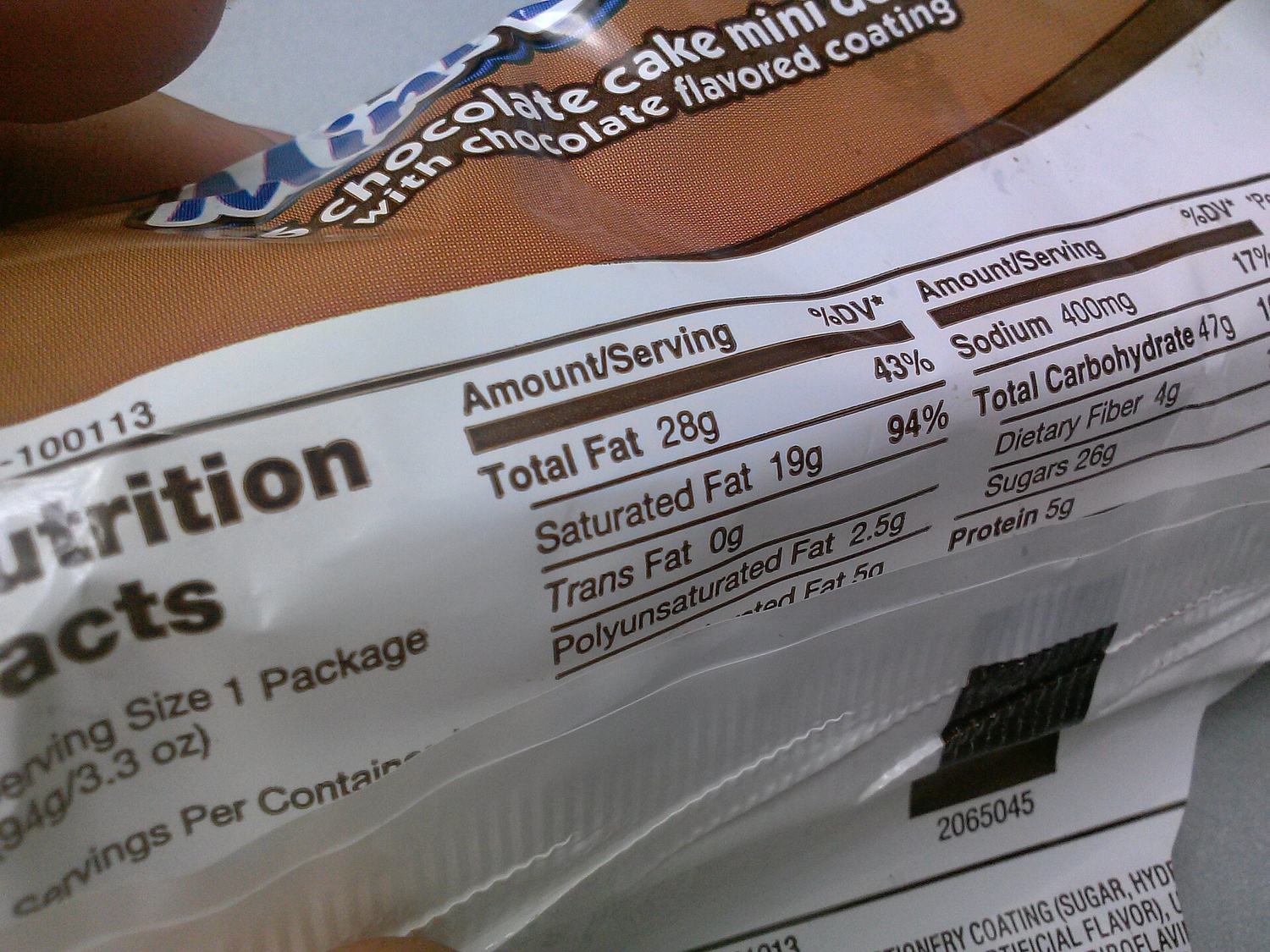
Check this initially. A packet of biscuits might list values for 2 biscuits, but most people eat 6. A bottle of juice might contain 2 and a half servings. Multiply to match what you actually eat.
Calories
This shows the energy per serving or per 100 grams. Comparing products is easiest using the per 100 g column, because serving sizes vary.
Sugars
Look at "of which sugars". As a general guide, per 100 g, more than about 22.5 g is high and under about 5 g is low. The World Health Organization suggests keeping free sugars below 10 percent of daily calories, and under 5 percent gives extra benefit. For most adults, that is roughly 25 to 50 grams a day. A 500 ml soda often contains over 50 grams on its own.
Fat and saturated fat
Compare total fat and saturated fat. Foods with high saturated fat per 100 g, above around 5 g, should be occasional. Also check the ingredients for trans fats or partially hydrogenated oil.
Sodium or salt
Too much salt raises blood pressure over time. The WHO recommends less than 5 grams of salt a day, roughly one teaspoon. Sodium is not the same as salt: multiply sodium by about 2.5 to get the salt equivalent. Stock cubes, instant noodles, processed meats, sauces and snack foods are major sources.
Fibre and protein
Higher fibre and protein are usually good. Whole grain bread should list a decent fibre content, around 6 g per 100 g or more.
Marketing claims to treat with caution
- "Natural": has no strict meaning. Sugar and palm oil are natural too.
- "Low fat" or "light": often means more sugar was added to keep the taste. Compare the sugar and calories.
- "No added sugar": the product can still be high in natural sugars such as fruit concentrate.
- "Fortified": vitamins added to a sugary cereal do not make it healthy.
- "Made with real fruit": might mean a tiny percentage of fruit.
- "Multigrain": does not mean whole grain. Look for "whole" at the start of the ingredient list.
- "Sugar free" drinks: contain sweeteners rather than sugar. They have no calories, but they do not teach your palate to enjoy less sweetness.
- "Energy" and "protein" labels: a protein bar may contain as much sugar as a chocolate bar.
Traps common in Ugandan shops
- Flavoured yoghurt and drinking yoghurt: can contain several teaspoons of sugar per cup. Plain yoghurt with fruit added at home is a better choice.
- Fruit juice and nectar: juice drinks are often mostly sugar water. Even 100 percent juice lacks the fibre of whole fruit, so treat it as occasional.
- Breakfast cereals and instant porridge sachets: many have high sugar levels. Check per 100 g.
- Instant noodles and stock cubes: very high in sodium.
- Packaged snacks and biscuits: high in refined flour, sugar and fat.
- Energy drinks: caffeine and sugar in large amounts. They are not suitable for children, and people with heart conditions should avoid them.
- Cooking oil bargains: check whether it is pure vegetable oil and how it is stored. Oil exposed to heat and light goes off faster.
A quick way to compare 2 products
Use the per 100 g column and compare these 5 numbers:
- Calories
- Sugars
- Saturated fat
- Salt or sodium
- Fibre
Choose the product with lower sugar, saturated fat and salt, and higher fibre, unless the food is meant for a specific purpose such as a high energy snack for a long run.
Do not overthink it
Most of the best foods have no label at all. Fresh vegetables, fruit, eggs, fish, beans, matooke, sweet potatoes and groundnuts need no nutrition panel. The more of your diet that comes from these, the less you rely on reading small print. Labels matter most for packaged foods that you buy repeatedly, so check those initially.
If you have a medical condition such as diabetes, high blood pressure, coeliac disease or a food allergy, labels become more important, and a dietitian or doctor can help you set clear limits. Check allergen warnings carefully each time you buy, since recipes change.
Key takeaways
- Ingredients appear in order of weight, so check the initial 3 items.
- Compare products using the per 100 g column and watch the serving size.
- Learn the different names for sugar, and keep sodium and saturated fat in check.
- Words like "natural", "light" and "fortified" are not guarantees of quality.
- Base most meals on foods that do not need labels at all.