The bench press is more than a chest exercise
The bench press builds the chest, the fronts of the shoulders and the triceps. It is also a whole body lift, because a stable base and a tight back let you push more weight safely. Many lifters complain of sore shoulders from benching, and most of the time the cause is a loose setup and a flared elbow position.
This post covers how to set up, how to press, and how to fix the problems that stall most people.
Safety initial
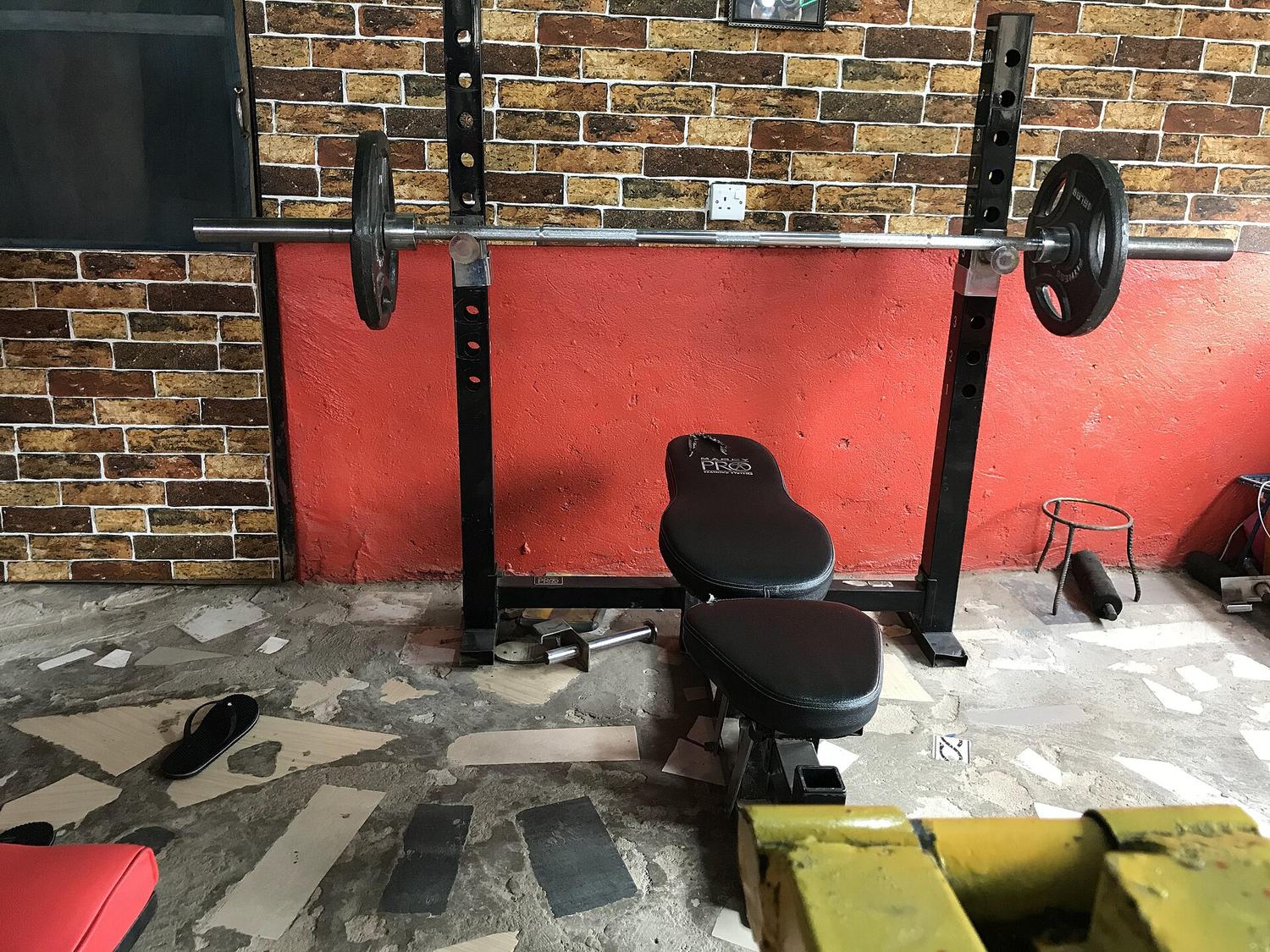
Never bench heavy alone without safety arms or a spotter. A bar across your chest is hard to escape from. Set the safety bars just above your chest height when you are lying down. If you are in a gym with a rack, use it. If you are lifting without a spotter, choose dumbbells, which you can drop to the sides.
The setup
- Lie down with your eyes under the bar. This lets you unrack without reaching forward.
- Plant your feet. Feet flat on the floor, under or slightly behind your knees. Press them into the ground throughout the lift. Feet on the floor create leg drive and stability.
- Squeeze your shoulder blades. Pull them back and down, as if putting them in your back pockets. This creates a stable shelf and protects your shoulders.
- Create a slight arch. A small natural arch in your upper and lower back is fine. Your buttocks stay on the bench.
- Grip the bar. Hold it a little wider than shoulder width, so your forearms are vertical at the bottom. Wrap your thumb around the bar. A thumbless grip makes it easier for the bar to slip.
- Unrack with straight arms. Lift the bar off the hooks and hold it above your shoulders before you lower it.
The press
Lowering
Take a breath in, brace your core, and lower the bar under control to the lower part of your chest, around the nipple line or a little below. Your elbows should sit at roughly 45 to 70 degrees away from your body, not flared out at 90 degrees and not tucked tightly to your sides.
Pressing
Pause briefly on your chest, or at least do not bounce. Push the bar up and slightly back toward the rack so that it ends over your shoulders. Breathe out as you pass the sticking point. Lock your arms out at the top without shrugging.
The bar path
The bar does not travel in a straight vertical line. It moves in a slight curve from low on your chest to above your shoulders. That is normal and efficient.
Common mistakes and fixes
Flared elbows
Elbows pointed straight out to the sides put stress on the shoulder joint. Bring them in a little and imagine bending the bar into a U-shape.
Bouncing the bar off the chest
This uses rebound instead of muscle and can bruise the sternum. Lower the bar under control and touch lightly.
Lifting your hips off the bench
If your buttocks rise, you are cheating and risking your lower back. Plant your feet and keep your hips down.
Wrists bending back
Your wrist should stack over your forearm. If the bar sits in your fingers, wrists fold. Place the bar lower in your palm, over the base of your hand.
Uneven pressing
If 1 side rises faster, your weaker side is lagging. Add dumbbell presses, which force each side to work alone.
Building a stronger bench
Your bench press improves when you train related muscles as well.
- Triceps: close grip bench press, skull crushers, dips or push downs.
- Shoulders: overhead press and lateral raises.
- Upper back: rows and face pulls. A strong back is your platform. Do at least as much pulling as pushing.
- Chest: dumbbell press, incline press, push ups and cable flyes.
A sample weekly plan
Train bench 2 times a week:
- Day 1 (heavier): bench press, 4 sets of 5 repetitions, then incline dumbbell press 3 sets of 10.
- Day 2 (lighter): bench press, 3 sets of 8 at a slightly lighter weight, then push ups 2 sets to near failure, and triceps work.
Rest 2 to 3 minutes between heavy sets. Increase weight by 1 to 2.5 kilograms when you complete all reps cleanly.
If your shoulders hurt
Some discomfort at the front of the shoulder usually comes from a flared elbow position, a very wide grip or too many pressing sessions in a week. Try these adjustments:
- Narrow your grip slightly.
- Tuck the elbows to about 45 to 60 degrees.
- Switch to dumbbells or a neutral grip, which allow the shoulder to move more freely.
- Add rear shoulder and rotator cuff exercises such as band pull-aparts and external rotations.
- Reduce pressing volume for a couple of weeks.
Sharp pain, pain at night, or weakness in raising your arm should be assessed by a physiotherapist or doctor.
No bench? No problem
Push ups are a great initial step. If standard push ups are too hard, start with your hands on a raised surface like a bench. When they become easy, add a pause at the bottom or wear a backpack with some weight. Many people in Kampala train well at home with push ups and a table, and then add the gym bench when they want heavier loading.
Key takeaways
- Set up with feet planted, shoulder blades pulled back and down, and a small natural arch.
- Lower the bar to the lower chest with elbows at roughly 45 to 70 degrees, and press up and slightly back.
- Use a rack with safety arms or a spotter for heavy sets.
- Train your back and triceps to support your bench, and do at least as much pulling as pushing.
- Shoulder pain usually improves with a narrower grip, tucked elbows and less volume, but persistent pain needs professional advice.