What the core actually is
When people say core, they often mean the 6-pack. The core is far more than that. It is a group of muscles around your trunk: the deep abdominal muscles, the obliques at your sides, the muscles of your lower back, your hips and your pelvic floor. Together they form a muscular cylinder around your spine.
A strong core does 3 jobs. It resists unwanted movement, it transfers force between your upper and lower body, and it moves your trunk when you need it to. Sit ups train only one part of that picture, the bending forward of the spine, and they do it in a way that many people perform poorly with neck and hip flexor strain.
Why do more than sit ups
- Real life needs stability. When you carry a jerrycan, lift a child or throw a bag onto a shelf, your core has to hold your spine steady, not curl you up.
- Strength lifts rely on it. Your squat, deadlift and overhead press all start with a braced core.
- Back health. A strong, well-coordinated trunk is associated with fewer episodes of lower back discomfort for many people, although back pain has many causes.
- A flat stomach needs more than ab exercises. Fat loss happens across the whole body, driven mainly by food intake and total activity. You cannot spot-reduce belly fat with crunches.
The 3 jobs and the exercises for each
1. Anti-extension: do not let the lower back sag
- Plank: forearms and toes on the floor, body in 1 line. Squeeze your glutes and pull ribs down. Start with 20 seconds.
- Dead bug: lie on your back with arms up and knees bent at 90 degrees. Slowly lower the opposite arm and leg while keeping your lower back flat on the floor.
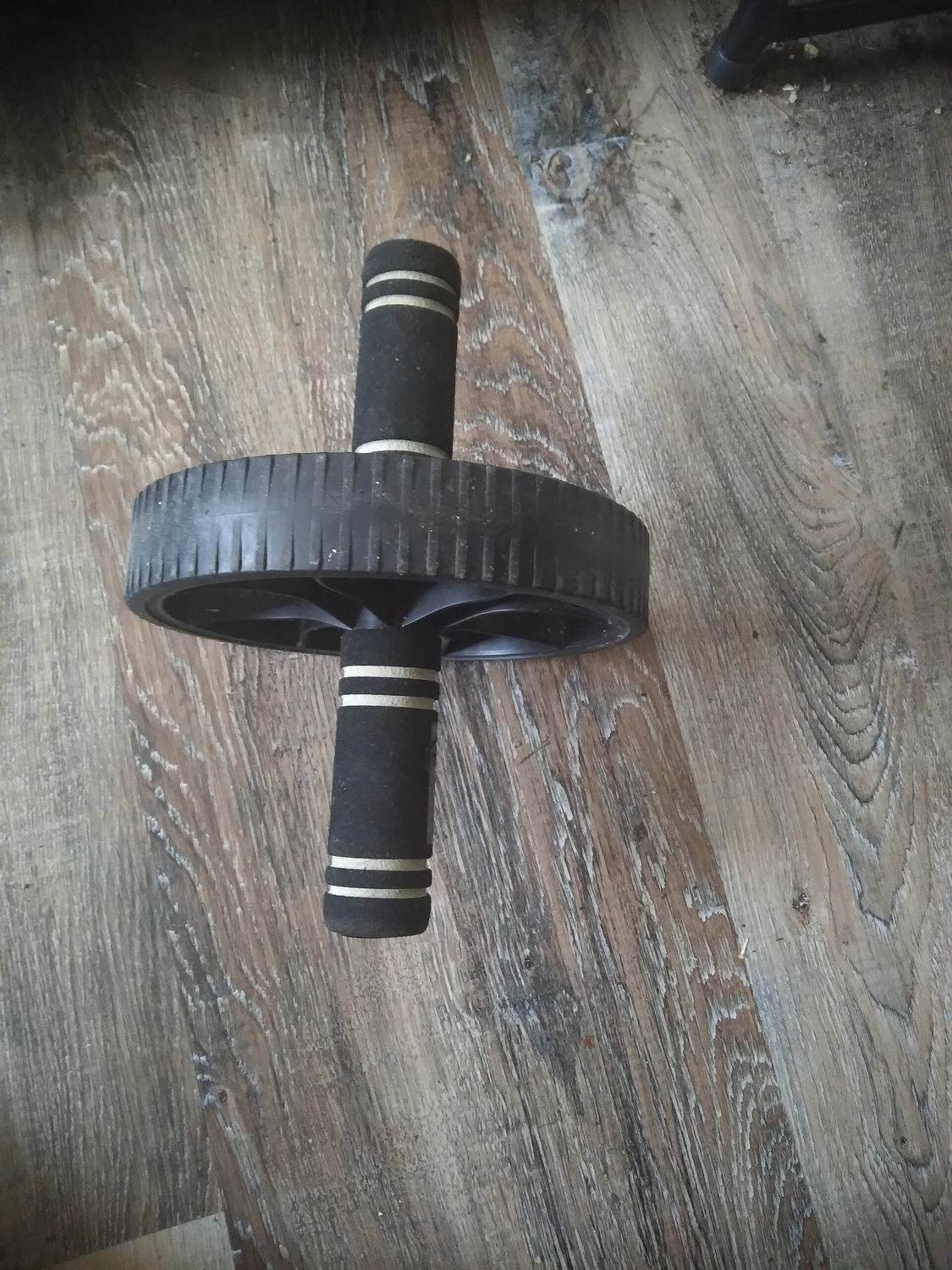
- Ab wheel or slider rollout: from your knees, roll forward with control and return. Advanced, so build up from the plank initially.
2. Anti-rotation: do not let the trunk twist
- Pallof press: stand sideways to a cable or band, hold the handle at your chest and press it straight out, resisting the pull to rotate.
- Bird dog: on hands and knees, extend the opposite arm and leg and hold steady without rocking.
- Suitcase carry: hold one weight and walk tall without leaning.
3. Anti-lateral flexion: do not collapse to the side
- Side plank: on one forearm, lift your hips so your body forms a straight line. Start with 15 to 20 seconds each side.
- Farmer's walk: 2 heavy dumbbells, walk tall and steady.
4. Controlled movement
Not everything is about holding still. Add movements that train bending and rotation under control:
- Hanging knee raise: hang from a bar and lift your knees without swinging.
- Cable woodchop: rotate through the trunk from high to low with a cable or band.
- Reverse crunch: lie on your back and curl your hips off the floor.
- Cable crunch: kneeling, crunch downward with a rope handle.
How to do a plank properly
The plank is the most common core exercise, and it is often done badly.
- Place your elbows under your shoulders.
- Make a straight line from your head to your heels.
- Squeeze your buttocks and tighten your thighs.
- Pull your ribs down toward your hips so your lower back does not arch.
- Breathe normally.
- Stop when your hips sag or your shoulders collapse.
10 seconds of a good plank beats a minute of a sagging one. Build up with several short holds, like 5 sets of 15 seconds, then extend over weeks. When 45 to 60 seconds feels easy, make it harder by lifting 1 foot or adding a shoulder tap rather than holding for several minutes.
A simple core routine
Do this 2 or 3 times a week, either after your main lifts or as a short session on its own. It takes about 12 minutes.
- Dead bug, 3 sets of 6 per side
- Plank, 3 sets of 20 to 40 seconds
- Side plank, 2 sets of 20 to 30 seconds per side
- Pallof press, 3 sets of 10 per side
- Hanging knee raise or reverse crunch, 3 sets of 8 to 12
- Farmer's walk, 3 trips of 20 to 30 metres
Progress by adding time to the holds, adding sets, or using a heavier load for the carries and Pallof press. The same rules of progressive overload apply here as for any other muscle.
Breathing and bracing
Learn to brace before you lift. Breathe into your belly so your abdomen expands in all directions, not just the front. Then tighten your trunk as if bracing for a light punch. Keep this tension while you perform the lift, then release at the top and take a fresh breath.
Do not hold your breath for long periods. If you have high blood pressure or heart disease, ask your doctor about heavy lifting and breath holding.
Common mistakes
- Going for the burn on crunches: high rep sit ups or crunches mostly tire the neck and hip flexors, with limited carryover to real strength.
- Hip flexor takeover: straight leg raises and sit ups with anchored feet often pull on the lower back.
- Poor form for long times: a plank with a drooping back is not a strong plank. Stop earlier.
- Neglecting the back: train the muscles of the lower back too, with hip hinges, back extensions and bird dogs.
- Training the core daily: like any muscle, your trunk needs recovery. 2 to 3 focused sessions a week is plenty.
After pregnancy or with back problems
If you have recently had a baby, especially a caesarean section, or you have a diastasis (a gap in the abdominal muscles), get advice from a physiotherapist before returning to planks and crunches. If you have back pain that radiates into your leg, or numbness, see a doctor or physiotherapist before starting a new core programme.
Key takeaways
- The core is a cylinder of muscles around your spine, and its main job is to stabilise.
- Train anti-extension, anti-rotation and side stability with planks, dead bugs, Pallof presses and carries.
- Quality beats duration: stop a plank when your form breaks.
- Core exercises will not spot-reduce belly fat, which depends on overall food intake and activity.
- Train your core 2 or 3 times a week and progress it like any other muscle.