Why dumbbells deserve more respect
A pair of dumbbells can train every muscle in your body. They are easy to store, they suit small spaces, and they make each side of your body work independently, which exposes and fixes weaker sides. They also allow a bigger range of motion in some exercises than a barbell.
Some people believe dumbbells are only for beginners or for finishing off a workout. That is not true. A well planned dumbbell programme builds real strength for many months, especially if you use progressive overload and good technique.
Choosing your dumbbells
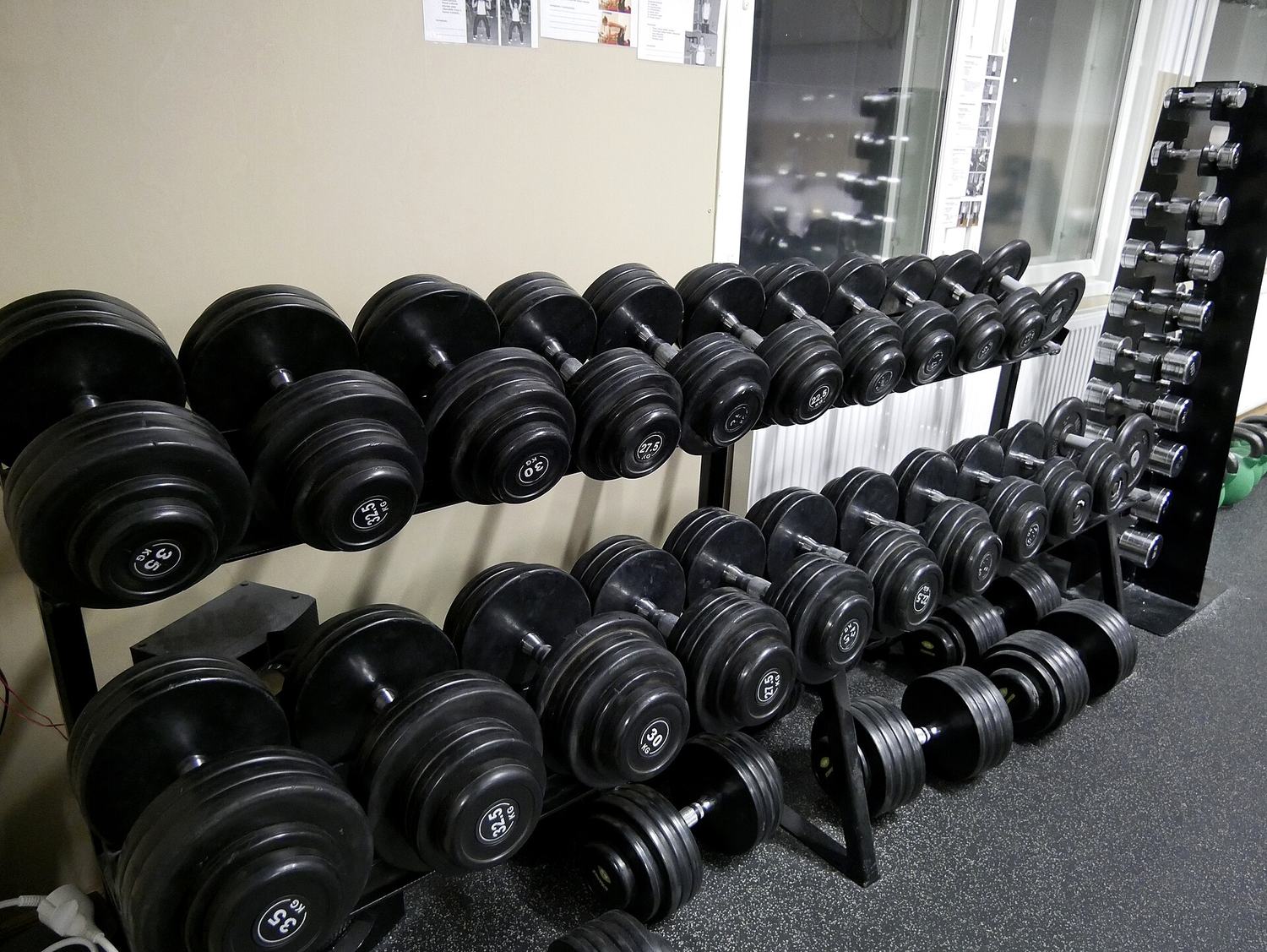
In a gym you will find a full rack. At home, you have 3 options:
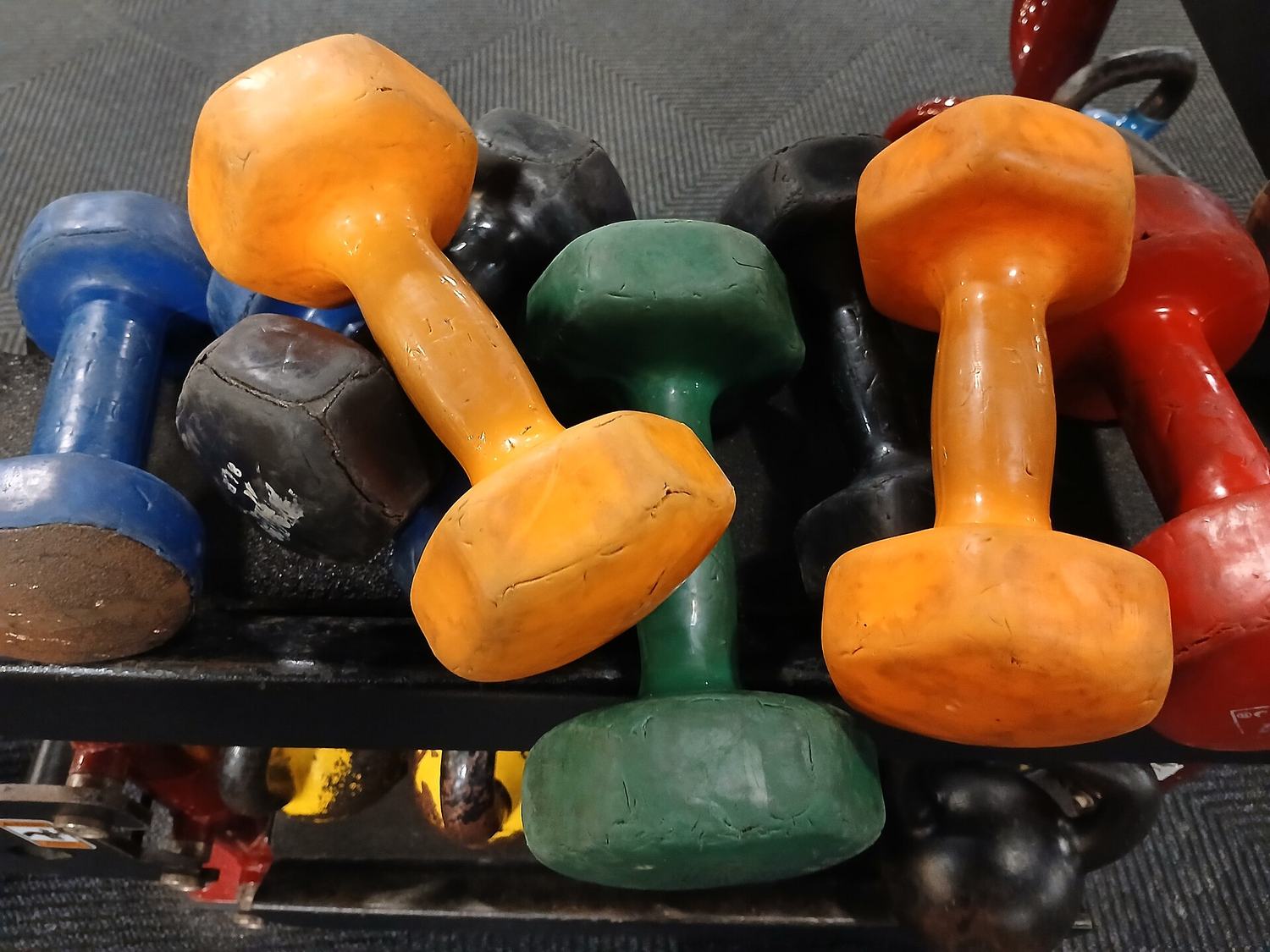
- Fixed dumbbells: durable and quick to pick up, but take space.
- Adjustable dumbbells: one pair that changes weight. They save space and money over time.
- A few pairs of different weights: for example 5, 10 and 16 kilograms.
Start with a weight that lets you complete 10 to 12 repetitions of the squat or press with control. Women often start with 4 to 8 kilograms for upper body movements and 10 to 16 for squats and deadlifts. Men often start slightly higher. These are only starting points. Strength differs widely and increases quickly in the initial weeks.
The essential movements
Lower body
- Goblet squat: hold 1 dumbbell at your chest and squat to a comfortable depth.
- Romanian deadlift: hold a dumbbell in each hand, hinge at the hips with soft knees, lower to mid-shin, and stand.
- Reverse lunge or split squat: step back, lower the back knee, drive through the front heel. Easier on the knees than walking lunges for many people.
- Step ups: use a sturdy bench or box, step up with 1 leg, and control the way down.
- Hip thrust: upper back resting on a bench, dumbbell across the hips, drive up and squeeze.
Upper body push
- Dumbbell bench press or floor press: lie on a bench or on the floor, press the dumbbells up over your chest.
- Seated or standing shoulder press: brace your core and press overhead without leaning back.
- Push ups with dumbbell rows (renegade row): an advanced move, add it when you are comfortable.
Upper body pull
- 1 arm row: hand and knee on a bench, pull the dumbbell to your hip.
- Chest supported row: lie face down on an incline bench and row both dumbbells.
- Rear delt fly: hinge forward and raise the dumbbells out to the sides.
Core and carries
- Farmer's walk: hold a heavy dumbbell in each hand and walk with tall posture. Excellent for grip and core.
- Suitcase carry: hold 1 dumbbell only and walk without leaning. It strengthens your side abdominal muscles.
Workout A: full body, 3 times a week
Do this on Monday, Wednesday and Friday. Rest 60 to 90 seconds between sets.
- Goblet squat, 3 sets of 10
- Dumbbell floor press, 3 sets of 10
- 1 arm row, 3 sets of 10 per side
- Romanian deadlift, 3 sets of 10
- Shoulder press, 2 sets of 10
- Farmer's walk, 3 trips of 20 to 30 metres
Total time is about 45 minutes.
Workout B: upper and lower, 4 days a week
Lower days (Tuesday and Friday)
- Goblet squat or front-loaded squat, 4 sets of 8
- Romanian deadlift, 3 sets of 10
- Reverse lunge, 3 sets of 8 per leg
- Hip thrust, 3 sets of 12
- Standing calf raise, 3 sets of 15
Upper days (Monday and Thursday)
- Dumbbell bench press, 4 sets of 8
- 1 arm row, 4 sets of 10 per side
- Shoulder press, 3 sets of 10
- Rear delt fly, 3 sets of 12
- Biceps curl and triceps extension superset, 2 sets of 12 each
How to progress with limited weights
The biggest worry with dumbbells is running out of weight. These methods keep progress going.
- Add reps: go from 10 to 15 or more repetitions before you increase the weight.
- Slow the lowering: take 3 seconds to lower the weight. It makes the same dumbbell feel heavier.
- Add a pause: stop for a second at the bottom of a squat or press.
- Use 1 leg: single leg versions of squats and deadlifts double the load on each leg. Bulgarian split squats make even a light dumbbell hard.
- Add sets: move from 3 to 4 sets over several weeks.
- Reduce rest: go from 90 to 60 seconds between sets.
Move up to the next weight when you can complete all sets and reps in your range with good form.
Technique tips
- Keep your wrists straight and stacked over your forearms.
- Control the weight on the way down. Do not drop the dumbbells at the bottom of a press.
- When you bring dumbbells to the starting position for a bench press, sit with them on your thighs, then lie back and use your knees to help them up. It saves your shoulders.
- Do not swing the weights to finish a rep. If you need to swing, the weight is too heavy.
- Use a bench or a sturdy table at home, not an unstable chair.
Heat and space
Training at home in Kampala can be hot, especially in the afternoon. Train in the early morning or evening when it is cooler, open windows, and drink water. Keep a small towel handy, and keep the floor clear so you do not trip on the dumbbells.
Key takeaways
- Dumbbells can train every muscle and build real strength when you progress them over time.
- Learn the key patterns: squat, hinge, lunge, press, row and carry.
- Run a full body routine 3 days a week, or an upper and lower split on 4 days.
- When the weights feel light, add reps, slow the tempo, use single leg exercises or reduce rest.
- Control every rep and avoid swinging or dropping the weights.