Many people believe that squats and lunges are bad for the knees, so they avoid them. In reality, well-loaded leg training is one of the best ways to protect the knee. The trouble starts when we do too much too soon, ignore the hips and ankles, or train through pain that is telling us to adjust.
This article gives general guidance for healthy adults and for mild, common knee aches. A swollen, locked or unstable knee needs a proper assessment.
How the knee works
The knee is a hinge joint between the thigh bone and shin bone, with the kneecap sliding in a groove at the front. It mainly bends and straightens. It relies on the hip above and the ankle below to control twisting and side to side movement.
That is why knee pain is so often a hip or ankle story. Weak glutes let the knee drift inwards. Stiff ankles force the knee to take more of the load. The knee gets the blame, but it is often the middle child of the leg.
Common causes of knee pain in gym goers and runners
- Front of knee pain around the kneecap, often felt on stairs, squatting or after sitting. Often linked to sudden increases in training or running volume.
- Pain just below the kneecap, common in people who jump, run hills or play football or basketball.
- Outer knee pain in runners, often after a rapid jump in distance.
- Sharp pain with swelling, locking or giving way, which suggests something structural, such as a meniscus or ligament injury, and needs a medical check.
Strength is protection
Strong muscles absorb force so the joint does not have to. A knee friendly programme builds:
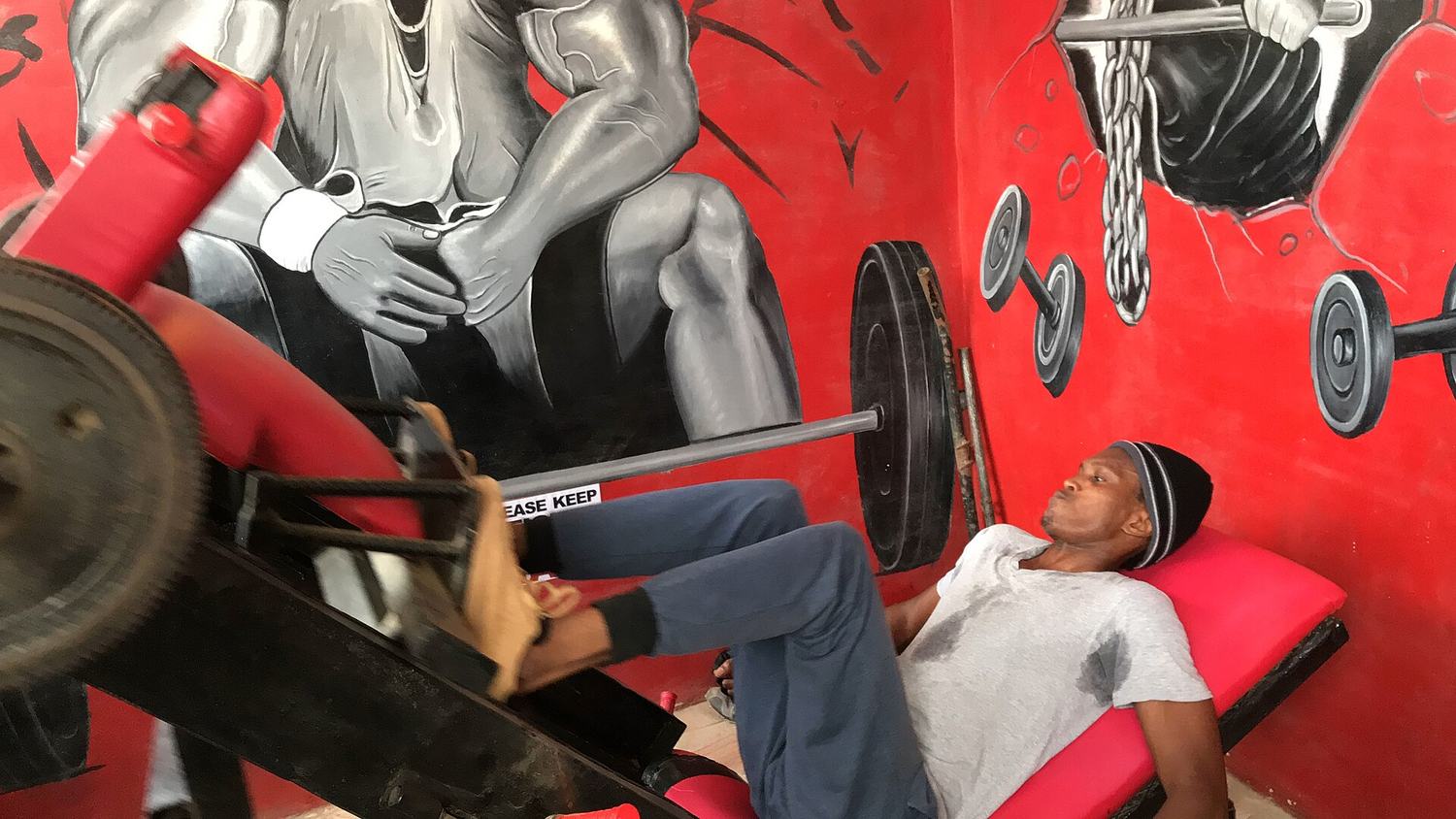
- Quadriceps: goblet squats, leg press, step ups, split squats.
- Hamstrings: Romanian deadlifts, hamstring curls, glute bridges.
- Glutes: hip thrusts, side steps with a band, single leg bridges.
- Calves: straight and bent knee calf raises.
- Hip abductors and core: side planks, clamshells and banded walks.
Do 2 or 3 leg sessions a week, with 2 to 4 sets of 6 to 12 reps for the main movements. Increase weight slowly, by small amounts, when the last rep still feels controlled.
Technique points for a happy knee
- Track the knee over the toes. On the way down, the knee should follow the line of your middle toes. If it collapses inwards, lighten the load, widen the stance slightly, and think about pushing your knees out.
- Let the knees travel forward. It is fine for your knees to go past your toes in a squat. Forcing them back often shifts the load to the lower back. What matters is control and comfortable ankle motion.
- Control the way down. Take 2 to 3 seconds to lower. Bouncing out of the bottom stresses the joint.
- Use a range you can own. If a deep squat hurts, squat to a box or bench at a comfortable depth, and work on depth over weeks.
- Do not lock out violently. Finish the movement with the glutes, not by snapping the knee straight.
Training around knee pain
If a movement provokes pain, you rarely need to rest completely. Adjust it.
- Reduce depth by squatting to a bench or lowering the range of the leg press.
- Slow the tempo to reduce impact and increase control.
- Change the exercise. If lunges hurt, try step ups or reverse lunges, which are often kinder.
- Use a lighter load with more reps to keep the muscles working.
- Cut jumping and fast running temporarily and replace with cycling, swimming or brisk walking.
A common guide is the "pain scale." Mild discomfort, up to about 3 out of 10, that settles within 24 hours is usually acceptable. If it climbs above that, or lingers into the next day, you did too much. Reduce next time.
Running and the knees
Runners get knee pain mostly because of mileage jumps, hard surfaces, and weak hips. Sensible habits:
- Increase weekly distance gradually, avoiding sudden jumps.
- Mix flat routes with softer surfaces where possible. Kampala's hills are a tough test, so walk the steepest sections early on.
- Wear shoes that are not worn out. If the sole is flat and uneven, replace them.
- Add 2 strength sessions weekly. Runners who lift usually tolerate more running.
Weight, food and recovery
Extra body weight adds load to the knee with each step, so gradual fat loss can help people with knee discomfort. Eat enough protein from beans, eggs, fish, groundnuts and meat to support muscle and tendon repair, and keep up with water, especially in hot weather. Sleep is where tissue recovers.
When to see a doctor or physiotherapist
Get the knee checked if you have:
- Swelling after an injury or twisting event.
- Locking, catching or the knee giving way.
- Inability to fully straighten or bend the knee.
- Pain at night or at rest that does not ease.
- Pain that has not improved after 2 to 3 weeks of sensible changes.
A physiotherapist can identify the cause and build a rehab plan around it.
A simple knee care session
Do this 2 times a week, 20 minutes:
- Glute bridge, 2 x 12.
- Banded side steps, 2 x 12 steps each way.
- Box squat to a comfortable depth, 3 x 8.
- Step up on a low step, 3 x 8 per leg.
- Romanian deadlift with light weights, 3 x 8.
- Calf raises, 3 x 12.
Key takeaways
- Squats and lunges are not bad for the knees when loads are built gradually and technique is controlled.
- Knee pain often traces back to weak hips or stiff ankles, so train the whole leg.
- Adjust depth, tempo and exercise choice rather than stopping completely when something hurts.
- Build running volume slowly and keep 2 strength sessions in your week.
- Swelling, locking, giving way or pain that does not improve in 2 to 3 weeks needs a professional assessment.